 ·
5 minute read
·
5 minute read
Think about the clients, prospects, and partners who matter most to your business. They’re probably senior people. Smart, well-informed, genuinely interested in what’s happening in their industry. And they’re almost certainly swamped.
They want to stay current. They intend to read that article someone forwarded. They’ll get to it later. Except later keeps not happening, because the next meeting starts and the next fire needs putting out and the day gets away from them again.
I’ve spent a good chunk of my career helping clients figure out how to reach these people. And the question that comes up more than almost any other is some version of “How do we stay top-of-mind to the people who are interested in our content but don’t think to seek it out?”
It’s a real problem. And through a fair amount of trial and error, one approach I’ve seen perform well also happens to be one of the most underestimated tools in B2B content marketing. If you guessed LinkedIn newsletter, you’re already picking up what I’m putting down.
Let’s talk about why this is such a valuable tool, starting with what it is.
What Is a LinkedIn Newsletter?
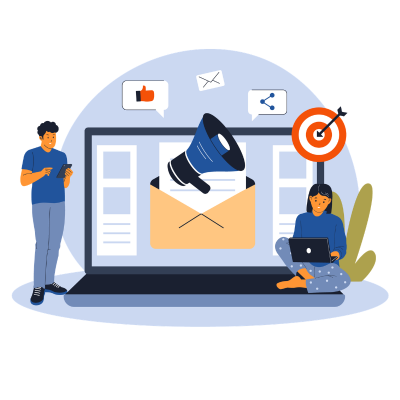 A LinkedIn newsletter is a recurring publication that lives natively on LinkedIn. When someone subscribes, they get both an email notification and a LinkedIn alert every time you publish. That sounds similar to someone subscribing to your blog, but there are some key differences.
Email subscriptions for new blog posts routinely end up in Gmail’s Promotions tab. Alternatively, LinkedIn newsletters land directly in the primary inbox at a solid success rate. Think about how often you peruse the Promotions tab in your Gmail account or “Other” emails in Outlook. Primary inbox emails are more likely to be read.
This likely explains why The B2B Collective found that LinkedIn newsletters average around 40% to 50% open rates. That’s impressive on its own and even more so when compared to Mailchimp’s benchmark data of 21.5% for standard B2B email marketing open rates. It’s worth noting that LinkedIn measures “clicks to read” versus traditional email open, so the comparison isn’t perfect. But the gap is real, and the inbox delivery advantage goes a long way toward explaining it.
What Is the Biggest Advantage of Launching a LinkedIn Newsletter?
Believe it or not, better open rates aren’t even the best reason to launch a LinkedIn newsletter. The mechanics are the real benefit.
When you launch your newsletter, LinkedIn sends a notification to your existing connections and followers. By making it incredibly easy for them to opt in, you’re creating an exceedingly large subscriber base from the start. As you make more connections, your subscriber base grows. Every time someone new follows your page, they get an invite to subscribe to your newsletter. This builds your audience without much effort on your part. Compare that to the amount of work you need to do to get subscribers for your blog, which involves initial and ongoing promotion with considerably less fanfare.
What makes all of this meaningful is your ability to reach the real decision-makers. LinkedIn and Edelman research found that 58% of decision-makers read at least an hour of thought leadership every week, and 55% use that content to actively vet organizations before they’ll take a sales call.
So, a LinkedIn newsletter allows you to reach senior buyers who do their homework. And they get served your brand’s messaging on their terms.
What Success Actually Looks Like (Spoiler: It’s Not Pipeline)
 Here’s where I see most B2B marketing teams go sideways with newsletters. They build one, run it for a few months, then look at the lead attribution report and decide it isn’t working.
The problem is that a LinkedIn newsletter isn’t a demand generation tool and shouldn’t be measured as one.
One of our clients, an advanced technology firm, was clear-eyed about this from the start. They launched their newsletter because they understood something essential about their audience. They are busy, senior people under real pressure — people who genuinely want to stay informed but often can’t carve out the time to read everything they intended to.
The newsletter delivers critical information to the people who need it, in a format that respects how little time they have. As our client put it, the goal was to deliver information that was “helpful and less promotional.”
They don’t try to calculate ROI per issue or use their newsletter as a lead source. Their primary focus is to ensure that the right people are reading and finding value in it.
The result has been resoundingly positive. Senior executives at major energy organizations have reached out unprompted to say they value the newsletter. Clients have even asked for missed issues to be resent, because they find the information so helpful. That kind of feedback, from that level of person in an organization, is huge.
If you’re evaluating a newsletter the same way you’d evaluate a paid campaign, you’re measuring the wrong thing.
The Executive-Led Newsletter: Worth Considering
One of the most notable trends in B2B LinkedIn newsletters right now is associating them with a person, a thought leader, versus a company.
Newsletters from founders, CMOs, and recognized industry experts consistently outperform corporate brand newsletters. It makes sense. People follow people. An executive’s newsletter carries a name, a face, a track record, and a point of view that a company page cannot replicate.
This is worth thinking about before you decide who your newsletter should come from and on which profile. A company newsletter and an executive newsletter are not mutually exclusive. But in industries where trust and expertise genuinely drive buying decisions, there’s a solid argument for leading with a person.
Are You Actually Ready to Launch a LinkedIn Newsletter?
Not everyone is, and rushing a launch when the conditions aren’t right does real damage. An inconsistent newsletter can give the wrong first impression, which is worse than doing nothing.
Here are the things I look for before recommending a launch:
- A LinkedIn presence that already has some traction. A newsletter amplifies momentum; it rarely creates it from scratch. You want a growing follower base, a history of consistent posting (two to four times a week is a reasonable benchmark), and real engagement from your posts. Aiming for 5,000 or more followers on a company or executive profile before launching gives you a meaningful starting point, because LinkedIn automatically invites your followers to subscribe.
- A specific point of view, not just a general topic. Newsletters with loyal audiences address specific angles. For example, “AI in Cardiology: What Clinicians Need to Know” works, whereas the broader “Healthcare Updates” does not, at least not as a differentiator. Before you launch, define not just what you cover, but why your take on it is worth reading.
- Focus on value over promotion. The second a newsletter starts to feel like a sales tool, it stops being a newsletter anyone wants to read. Focus on what helps your audience do their jobs better. Product updates and company news can live somewhere else.
- Three to five recurring content themes. Readers should know what to expect from you. Successful newsletters are built around repeatable content pillars: industry analysis, tactical guidance, case studies, data, and perspective from the leadership team. Identify yours before you launch, not after.
- A publishing cadence you can maintain. Starting monthly is completely fine. Publishing only once a month, consistently, for an entire year is worth far more than an ambitious weekly schedule that collapses after a handful of issues. Build the habit before you build the frequency.
- Connect to everything else you create. A newsletter issue can become a LinkedIn post, a blog article, a webinar topic, or a piece of sales enablement content. If you’re doing the work of producing quality content, you might as well get more than one use out of it.
One more thing: If the goal is primarily promotional, a newsletter is probably not the right format. Content that reads like a product update tends to bleed subscribers. Newsletters work because readers trust that they’re getting something genuinely useful. Break that trust and they unsubscribe, which is its own kind of signal you do not want to send.
Want to Build a LinkedIn Newsletter Your Clients Will Actually Read?
Clariant Creative works with B2B companies to develop and manage LinkedIn newsletters that build trust, strengthen relationships, and keep your brand visible with the people who matter most. If this is something you’re thinking about, we’d love to talk through what it could look like for your business.